

AI Automation
AI Automation That Earns Its Keep
Repetitive, high-volume work taken out of your team's week and wired into the systems you already run. Including the part where we tell you it is not worth it.
AI automation takes repetitive, high-volume work out of your team's week and wires it into the systems you already run, whether that is HubSpot, Microsoft 365, SharePoint or a custom platform. Webcoda has built automation for NSW councils and reverse-engineered legacy systems for private clients, and we will tell you plainly when the job does not need AI at all.
Who this is for
Someone re-keys data between two systems
A rules-heavy assessment process
A predictable but high-volume task
When it is not worth it?
Sometimes it is not, and we will tell you when. It is worth it when the work is high volume, repetitive, and currently done by someone who should be doing something better.
It is not worth it when the process is rare, when the cost of an error is severe and unrecoverable, or when a database and a form would do the job.
What we deliver
-
01
A scoped automation, not a platform
One process, defined narrowly enough to finish, with the exceptions written down before we build rather than discovered afterwards.
-
02
Integration into the tools you already use
The output lands where the work already happens: your CRM, your intranet, your case system. No new place for staff to check.
-
03
Monitoring and logging
Every run recorded, with a way to see what it did and why. Automation you cannot audit is a liability, not a saving.
-
04
Handover documentation and training
Your team can change the rules, see the failures and switch it off. We would rather not be the only ones who understand it.
Sometimes it is not, and we will tell you when. It is worth it when the work is high volume, repetitive, and currently done by someone who should be doing something better.
It is not worth it when the process is rare, when the cost of an error is severe and unrecoverable, or when a database and a form would do the job.
Not sure which side of that line you are on? Start with the readiness assessment
What we have built
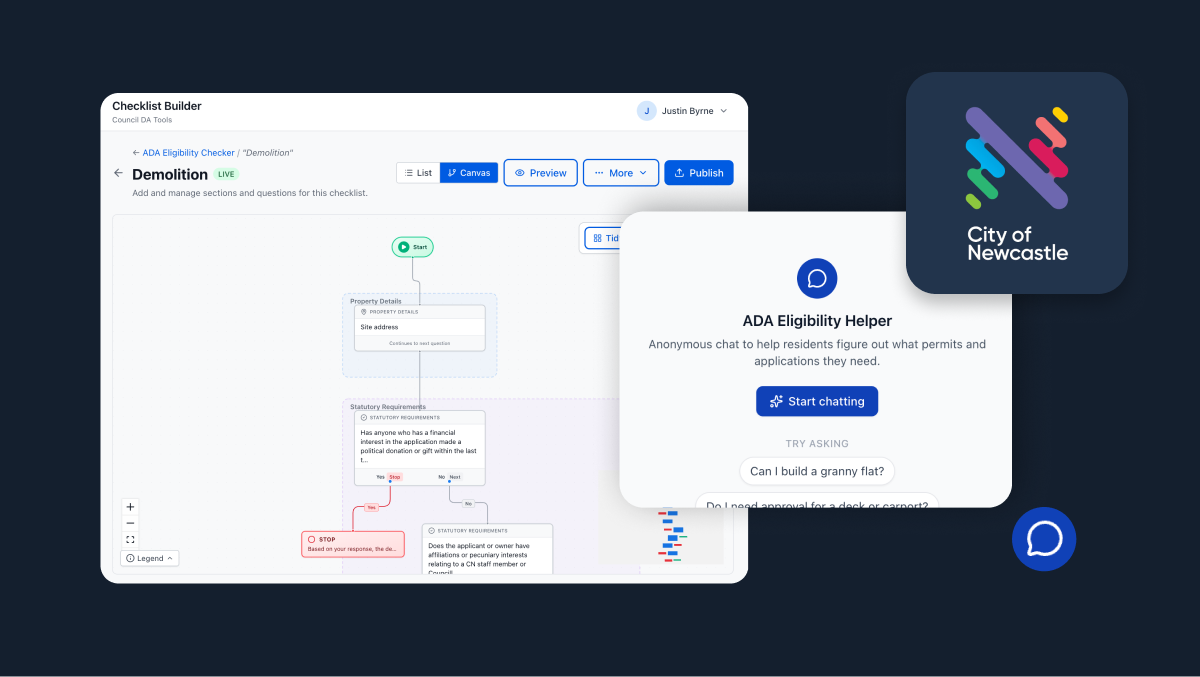
DA checklist automation for NSW councils
AI development application checking wired into the council's existing workflow, with the rules held where planners can see and change them. The same shape suits any high-volume, rules-heavy assessment – grants, compliance, tenders, licence renewals.
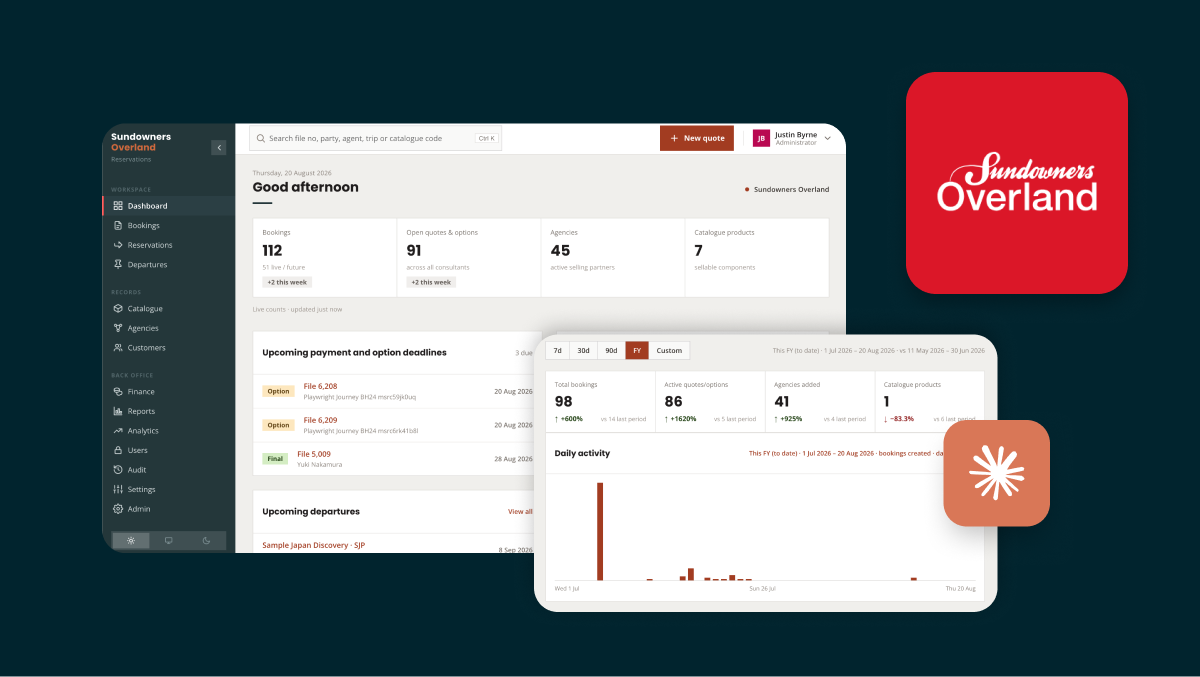
Sundowners legacy reverse-engineering
How an engagement runs
-
Step 01
Assess
We watch the process being done and count it. Volume, time per item, error rate, and who currently absorbs the exceptions. This is where most candidate automations get ruled out.
-
Step 02
Prototype
We build the narrowest useful version and run it beside the humans. Same inputs, outputs compared, nothing switched over until the comparison is boring.
-
Step 03
Integrate
We wire it into the systems the work already lives in. Permissions, logging, failure paths and a manual override, before anyone relies on it.
-
Step 04
Scale
We extend it to the neighbouring cases, or stop. Some automations are one process and done. We would rather say that than sell a programme.
Honest scoping
Starts with a paid assessment
Then one process, fixed scope
Support and monitoring
Automation, answered
Talk to us about automation
Thirty minutes, no pitch deck. Bring the process that annoys you most.