Web development

Web development company in Sydney

web-development

Custom websites and enterprise CMS platforms, built to last longer than the agency that made them 

Book a 30-minute scoping call

CERTIFIED PARTNERS

Webcoda is a certified B Corp based in Surry Hills, Sydney, with 16 Australia-based staff and over 500 websites and intranets delivered since 2005.

In short

We have been building websites, intranets and web applications since 2005 — more than 500 of them — for organisations where a broken website is a genuine problem rather than an inconvenience. 

Why organisations hire us

We are still here.

Twenty-one years, sixteen Australian staff, and a client list where relationships are measured in years rather than projects. If your last developer disappeared, or handed over a codebase nobody can read, we have picked up that job many times.

We build so your team can run it.

The most expensive thing about a website is not building it — it is the four years afterwards where every small change needs a developer. We structure the CMS so your marketing team can publish, restructure and launch campaigns without raising a ticket. On the Infrastructure NSW build, that meant more than 25 configurable modules editors combine themselves. On Sydney Zoo, a 45% reduction in time-to-content and a 30% drop in administrative work.

We know the platforms properly.

We are certified partners of Umbraco, HubSpot, Microsoft, Xperience by Kentico and Kontent.ai, with six certified Umbraco developers on staff. Not resellers — we have shipped enterprise builds on all of them, which is why we can tell you honestly when the platform you have been sold is wrong for what you are trying to do.

We work inside government procurement.

We have delivered for NSW Government agencies, federal agencies and councils. We understand WCAG accessibility obligations, records requirements, security review, and the fact that your project has a probity officer.

How we scope a web development project

Most website projects fail in the first three weeks, not the last three. Here is how we spend them.

  1. Step 1 · 2–4 weeks

    Discovery

    We start with what the website has to do, not what it has to look like. Who uses it, what they are trying to finish, what happens in the systems behind it, and what is currently going wrong. For a government client that usually means stakeholder interviews across several divisions. For a commercial client it usually means analytics, a content audit and a hard conversation about which pages nobody reads.

    The output is a requirements document and a fixed scope. If we cannot write one we cannot quote one, and an agency that quotes without it is guessing.

  2. Step 2 · 2–3 weeks

    Information architecture and content modelling

    This is where a build is won or lost. We define the content types, the relationships between them, and the fields editors will fill in — before anyone designs anything. Get it right and the site flexes for a decade. Get it wrong and you are rebuilding in two years because every new page needs a developer.

  3. Step 3

    Platform selection

    We recommend the CMS at this point, once we know the content model — not at the pitch.

  4. Step 4 · 9–21 weeks

    Design and build

    Design in reviewable stages, then development in sprints with working software you can look at. You see the site running in a staging environment early and often. No six-week silences ending in a reveal.

  5. Step 5 · 3–4 weeks

    Accessibility, testing and UAT

    We test against WCAG 2.2 Level AA as we build rather than auditing at the end, because retrofitting accessibility costs several times what building it in does. Cross-browser and device testing, performance testing against Core Web Vitals, and a structured UAT period where your team breaks it on purpose.

  6. Step 6 · 1–2 weeks, then ongoing

    Launch, and the year after

    Migration with redirect mapping so you do not lose search rankings, a monitored launch window, then training and documentation for your team. Most of our clients stay on a support retainer afterwards, which is the main reason we are careful about how maintainable the code is.

Choosing a CMS

The platform decision outlives the design by years. A short version of how we advise on it.

Umbraco

Our default for organisations that want control without licence costs. Open source, .NET, endlessly extensible — which matters when your requirements are specific. We built Infrastructure NSW on Umbraco with more than 25 editor-controlled modules and a live PDF export of project timelines, and Tresillian's national site with geolocation to find the nearest centre.

Best for: government, not-for-profit, and anyone with genuinely custom content needs.
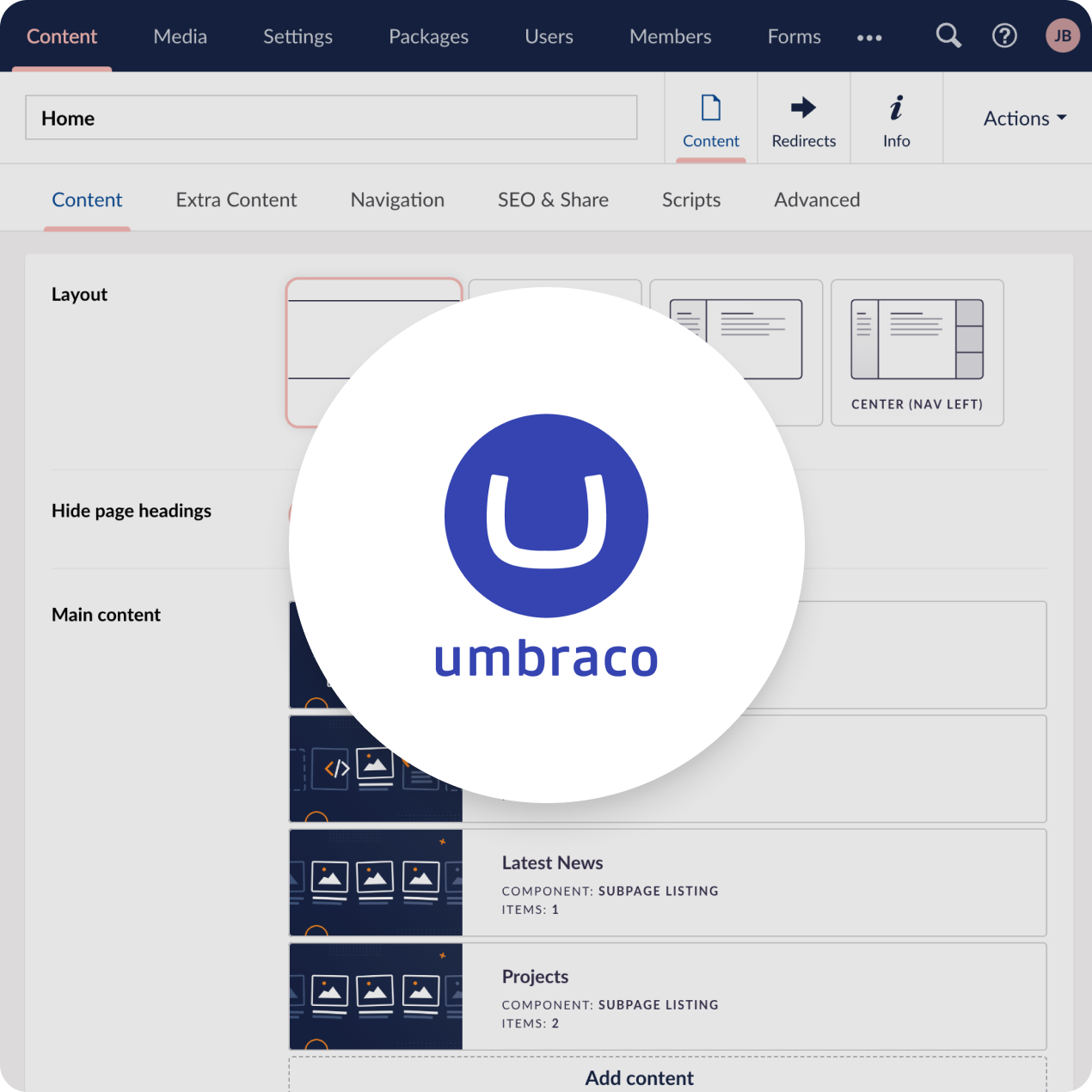
Umbraco development

Image-umbraco-1

If you are not sure, that is a normal place to start. Contact us to discuss.
What website development costs in Sydney

Most agencies will not publish this. It is the first thing every buyer wants to know, so here is a straight answer.

Project type Indicative range (ex GST) Typical timeframe
Redevelopment on an existing platform — new front end, same CMS $25,000 – $45,000 6–8 weeks
Standard corporate website — custom design, new CMS, light integration $45,000 – $90,000 12–16 weeks
Enterprise or government build — migration, integrations, WCAG 2.2 AA, multi-stakeholder $90,000 – $250,000+ 5–9 months
SharePoint intranet $60,000 – $180,000 3–6 months
Ongoing support and development retainer From $2,500 / month Ongoing

What actually moves the number: the volume of content to migrate, how many systems the site has to talk to, whether accessibility is a compliance obligation or a preference, and how many people have to approve things. Design is rarely the expensive part. Integration and stakeholders usually are.

We quote fixed scope after discovery. If an agency gives you a number before understanding your content model, the number will change.

Not ready for a full rebuild? Ask us for a technical audit of your current site – we will tell you honestly whether it can be stabilised instead.

Request a free technical audit

How long a build typically takes

Discovery and requirements2–4 weeks
IA and content modelling2–3 weeks
Design3–5 weeks
Development6–16 weeks
Accessibility, testing and UAT3–4 weeks
Migration and launch1–2 weeks

The single biggest cause of overrun is content. Not design, not development — content. Websites wait for copy far more often than they wait for code, so we build the content production timeline into the schedule from day one.

Recent work

Laptop-MMP
HubSpot Content Hub and ticketing integration

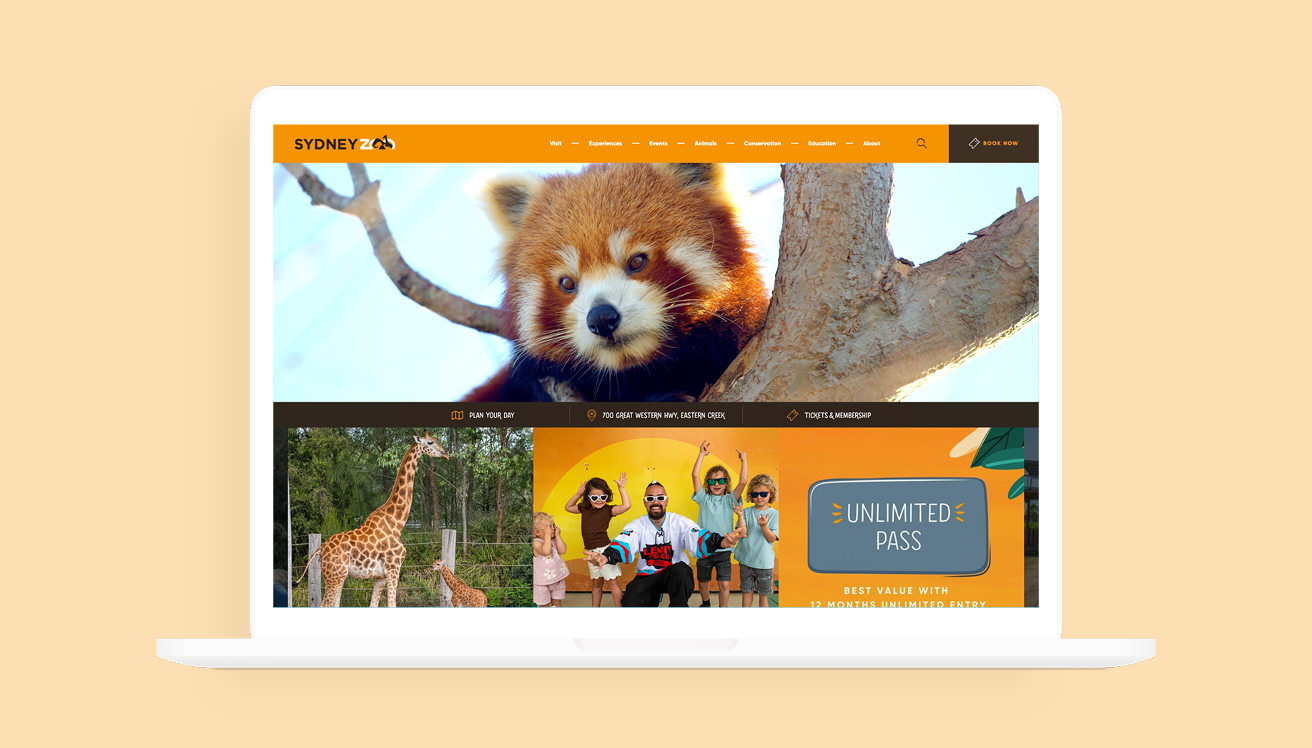
Sydney Zoo

Sydney Zoo needed to move off WordPress onto something that could carry its marketing operation and handle high-traffic ticketing periods. We ran a phased migration onto HubSpot Content Hub — integrating HubSpot while the site was still on WordPress, then consolidating — and built a custom interface layer over their CustomLinc ticketing system to simplify booking.

45% reduction in time-to-content · 30% fewer administrative tasks
Read the case study
INSW-home-laptop
Umbraco for a government agency

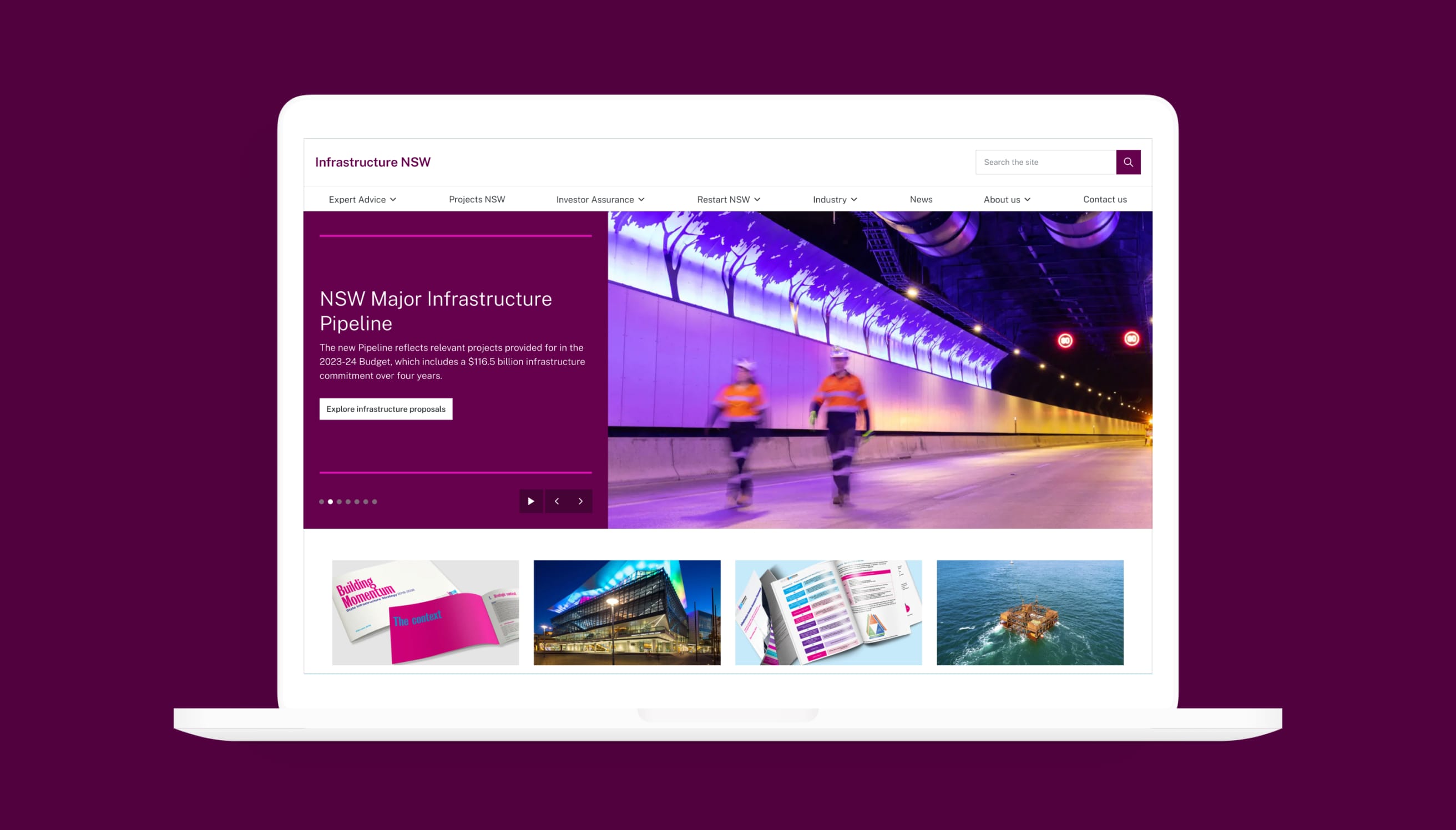
Infrastructure NSW

A NSW Government agency that needed to publish and maintain complex infrastructure project information without a developer in the loop. We built on Umbraco with more than 25 configurable modules — timelines, accordions, carousels, listings — plus a custom project timeline with live PDF export and an interactive image hotspot module.

Editors can build thousands of page layout combinations with no further development work.
Read the case study
Laptop-tresillian
Umbraco rebuild for a national not-for-profit

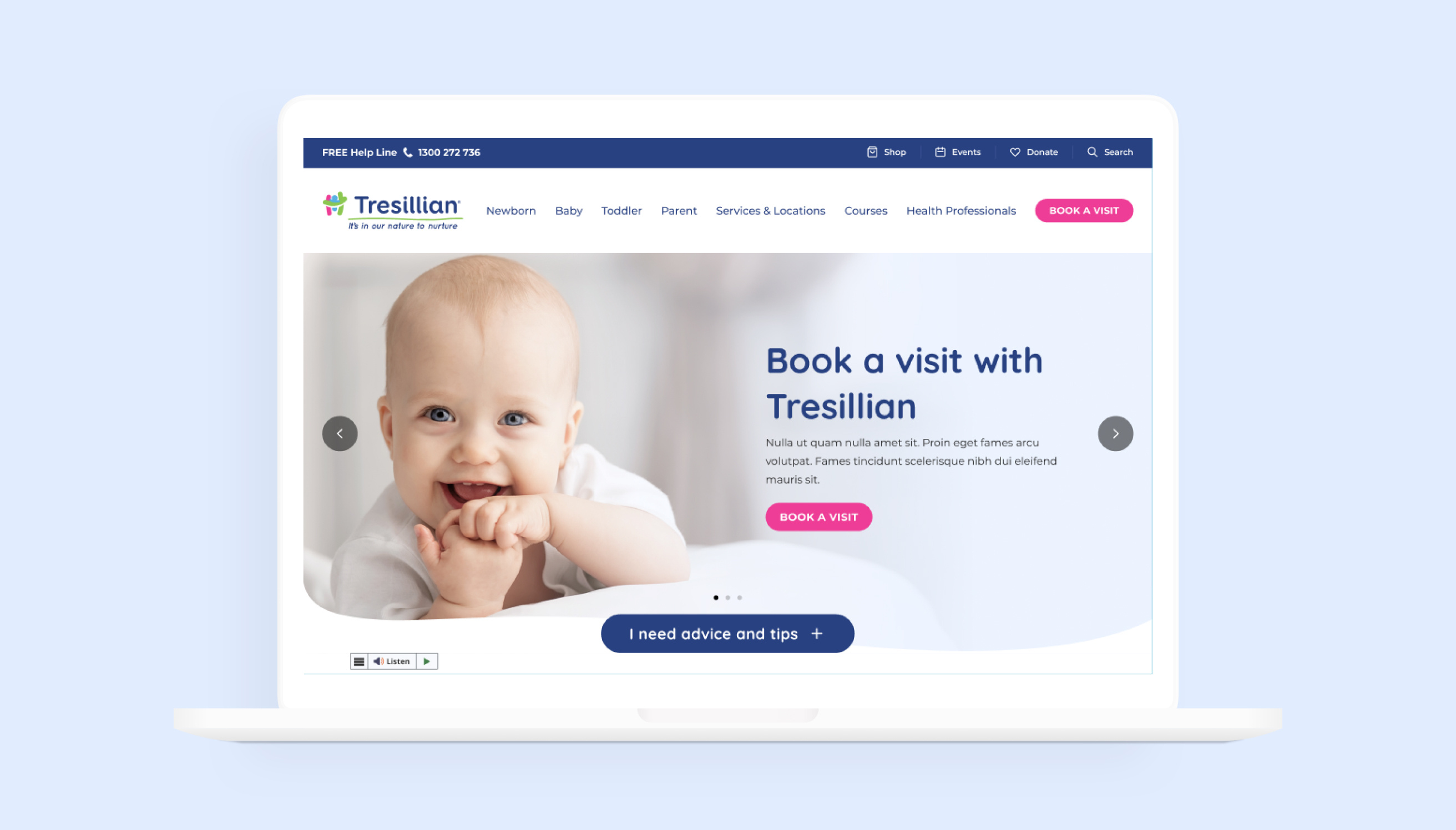
Tresillian

Tresillian's site ran on an ageing Umbraco install with limited support from its previous agency. We rebuilt it on current Umbraco, designed around the reality that its users are exhausted new parents looking for help at 3am, and integrated Google Maps geolocation so families can find their nearest centre anywhere in Australia.

Improved usability feedback, higher staff satisfaction, and inbound media interest after launch.

Read the case study

Also recently: NSW Health intranets, UNSW BusinessThink, AIHW’s Indigenous HPF and GEN Aged Care Data, Centennial Parklands, Barangaroo, JMC Academy, Sony Scene, Metropolitan Memorial Parks, Nanosonics and Martinus Rail. See all our work

Frequently asked questions

Still unanswered? Call 02 9370 3636 and ask.

 For a professionally built custom website, budget $25,000 at the low end for a redevelopment on an existing platform, $45,000 to $90,000 for a standard corporate site, and $90,000 upwards for an enterprise or government build with migration, integrations and accessibility compliance. What drives the number is content volume, system integrations and the number of stakeholders — rarely the design. 
Six to eight weeks for a straightforward redevelopment, twelve to sixteen weeks for a standard corporate website, and five to nine months for an enterprise or government build. Content production is the most common cause of delay, so we schedule it from the start. 
It depends on your content model, not on what is fashionable. Umbraco for control and custom requirements, HubSpot Content Hub when the site and your marketing engine should be one system, Xperience by Kentico for commerce and multi-site estates, SharePoint for intranets, and headless when content has to feed several channels. We make the recommendation after discovery. 
Yes, and we do it regularly. We start with a technical audit — what the code looks like, what it depends on, what is undocumented, and what it would cost to maintain against what it would cost to rebuild. Sometimes the honest answer is that it can be stabilised rather than replaced, and we will tell you that. 
Yes, with a proper redirect map. Every existing URL is mapped to its new destination before launch, we preserve metadata and structured data, and we monitor Search Console closely for the first several weeks. Ranking loss during migration is almost always the result of skipping this step. 
We build to WCAG 2.2 Level AA as standard and test throughout the build rather than auditing at the end. This is a compliance obligation for government clients and increasingly an expectation everywhere else. 
Yes. We host on Azure and most clients move onto a support and development retainer after launch. That retainer is why we care so much about maintainable code — we are the ones who have to work in it afterwards. 
Yes. We have delivered for NSW Government agencies, federal agencies and local councils, and we are familiar with tender processes, probity requirements, security review and the documentation that comes with them. 

Talk to us about your project

Tell us what you are trying to build and we will tell you honestly what it takes — including when the answer is that you do not need a rebuild.

Book a 30-minute scoping call Request a free technical audit

No obligation, no pitch deck. We will tell you what we find either way.

Or call 02 9370 3636