How to Compare Sydney UX Agencies for a Redesign and CMS Migration

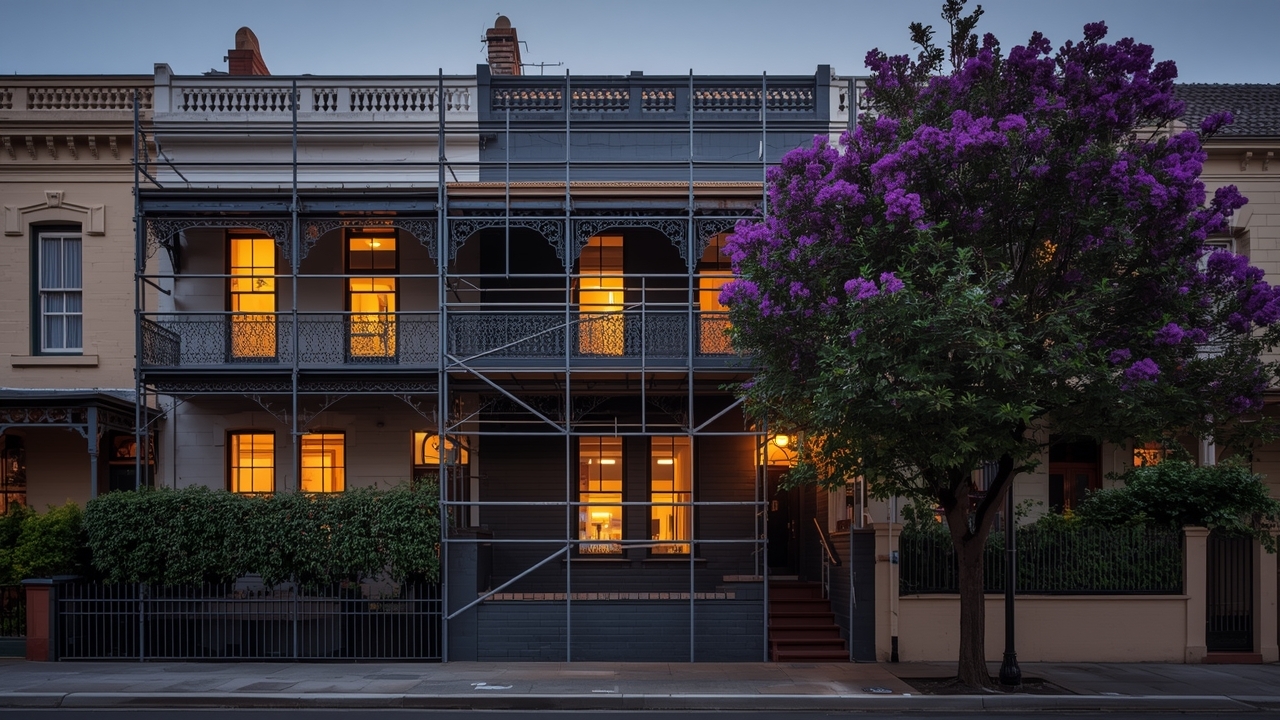
A redesign and a CMS migration are two different projects. One changes what people see and how they find things. The other means moving to a new website content management system, with every page, field and form coming along for the ride. It's tempting to buy them as one, because the old design and the old platform can wear out together. That's sensible. It's also a bit like renovating a terrace while you're moving into it: the redesign wants to change everything, and the migration wants to change as little as possible.
Agency directories tell you who exists. They don't tell you whether a Sydney web development agency can carry both at once without one wrecking the other. This is a buyer's framework for that question: what to ask, what a good answer sounds like, what a weak one sounds like, and the evidence to demand before you sign. Full disclosure: Webcoda sells exactly this work, so weigh my opinions with that in mind. I'd still rather you hired the right agency than the wrong one, us included.
Key Takeaways
- The first question isn't who designs better. It's whether the agency can tell you which of three sequences suits your project, and why.
- Someone has to own the content model, because that's exactly where the redesign and the migration collide.
- A new information architecture multiplies the redirect map, so the IA needs sign-off before mapping starts.
- Ask for a list of every integration surface on your current site and how each one lands in the new templates.
- Sometimes splitting the work is right. A good agency will say so without being asked.
One Project or Two? Start With Sequencing
There are three honest ways to run a redesign and a migration together. None of them is always right. Each one trades one risk for another, and I don't think a risk-free order exists.
Migrate first and keep the design
If the design still works and the platform is the problem, move the site across with the design intact and redesign later. UTS College is an example: a 1,400-page site migrated to HubSpot CMS with the design preserved, templates and modules rebuilt, and the site configured so non-developers could edit it. Lower risk, less disruption. You just don't get the new experience yet.
Redesign on the new platform in one go
When the user experience and the platform are both failing, doing them together saves building templates twice. JMC Academy has been a Webcoda client across multiple website iterations and different CMSs; its latest redesign rested on deep UX discovery (surveys, interviews, user testing, user journeys), and the case study describes a move from a costly CMS to a free, open-source system, Umbraco, with significant savings. Most rewarding, most demanding.
Phase the risky integration first
Sometimes one integration carries most of the risk. Sydney Zoo moved from WordPress to HubSpot Content Hub, but the custom interface layer over its CustomLinc ticketing system was built first, while the site stayed on WordPress. The CMS move came second. That's the cautious route, and for a revenue system I think it's the wise one. (Ticketing is revenue. Nobody wants to be debugging it on launch day.)
So how do you choose? Three questions help. Is the design actually broken, or just dated? Is there one integration that would hurt badly if it failed? And can your organisation absorb two kinds of change, a new look and new editing tools, in the same month? Bring those answers to every agency you're comparing. A good one can argue for any of the three and tell you which fits. A weak one has the same answer for everyone, whichever suits its own process. (You'll know it when you hear it.)
Who Owns the Content Model?
If I could ask only one question in a pitch meeting, it'd be this one. In a combined project the content model (the page types, their fields, the components editors can use) is where UX and migration meet. If the designers draw page types from research while the developers copy the old CMS's structure, you end up with two models and a painful reconciliation somewhere in the middle of the build.
Ask who owns it. Ask when it's frozen. Ask how the migration mapping is derived from it. The answer you want: the mapping comes from the new model, not the old one, and one named person signs it off.
Two examples of a designed content model in practice. For Infrastructure NSW, Webcoda designed and developed a new Umbraco website with flexible CMS content modules and a bespoke project timeline with PDF export. For Metropolitan Memorial Parks on HubSpot Content Hub, navigation was designed on cognitive-psychology principles over a component-based architecture, and the case study reports a 45% reduction in time-to-content through improved navigation and a 30% decrease in administrative tasks. Clean, structured page types also keep content easy to extract. Honestly, nobody yet knows how much that will count for AI search visibility over the next few years, but I'd bet on structure regardless.
A New Information Architecture Means New URLs
I'll keep this one short. A migration that keeps the structure needs a redirect map. A redesign that changes the information architecture multiplies it, because sections merge, split and disappear. So ask who signs off the new IA before the redirect map is built, and what happens to the pages the redesign deletes. "We'll sort redirects near the end" is a weak answer. The IA is the input; the map follows it.
Integrations Have to Survive the Redesign
A redesign touches every template. Templates are where integrations surface: ticketing, CRM forms, member logins, maps, events. That's how a redesign breaks an integration nobody planned to touch.
Ask each agency for a list of every integration surface on your current site, and how each one will be carried into the new design. If they haven't asked you for that list by the second meeting, it tells you something.
From Webcoda's own case studies:
- Sydney Zoo: the CustomLinc ticketing layer, linked through to HubSpot CRM to store contacts.
- JMC Academy: a Salesforce Marketing Cloud integration.
- St Vincent de Paul MAVs: member details in a custom CRM, an integrated user database for login authentication, and personalised news and events.
- Tresillian: a Google Maps integration to find the nearest centre, alongside events and ecommerce.
Each lives inside page templates and needs a plan if the templates change. That's systems integration work, and it belongs in the scope alongside the design. Not after it.
Accessibility Is Cheaper Inside the Redesign
A migration on its own carries the old site's accessibility problems across, faithfully. A redesign is the one moment you can build the component library to WCAG 2.2 Level AA once and let every page inherit it. Leave it until after the migration and you're fixing it template by template. Ask how accessibility is built into the components themselves, and how it's checked before content goes in.
Can They Run Two Workstreams Without One Blocking the Other?
This is where enterprise delivery fit shows up. A combined project has design sign-off gates, content freeze windows, stakeholder approvals, staging and parallel environments, and one stream that's easy to leave out of a proposal: content rewriting. A redesign can expose content that has to be rewritten. Ask who does it. If the agency doesn't, you'd rather know that before the schedule depends on it.
A good answer sounds like a plan where migration build starts on page types that are already frozen while design finishes the rest. Named approvers. Gates with criteria. A content freeze you can put in a calendar. (My pet hate is a beautiful Gantt chart with no content freeze on it anywhere.)
A weak answer sounds like "design first, then we'll see". It isn't dishonest. It just means two projects running back to back, with the second inheriting every delay from the first.
The Evidence to Demand
Screenshots prove an agency can make things look good. They don't prove it can run a combined project. Ask for:
- A case study where the redesign and the migration happened together, on your class of platform.
- A reference you can phone, ideally someone from the client side of that project.
- The content model document from a past project.
- The redirect map from a past project.
Documents are harder to dress up than portfolios. If an agency can't show you either one, ask why. If they won't, that's an answer too.
When You Should Split the Project in Two
Combining the two isn't always smart. I'd split it when:
- the current content is poor, because you'd be migrating material that's about to be rewritten anyway;
- the budget can't carry both, and doing both badly is worse than doing one well;
- the integration is the only thing actually broken, in which case fix that and leave the rest alone.
Doing one thing first isn't a failure of ambition. It can be the cheaper, calmer and more honest path, and an agency that tells you so is worth listening to. So here's a last test worth keeping: ask each agency when you shouldn't hire them for the whole thing. We're all still working out where the line sits, project by project, and the answer will tell you more than any portfolio.
Where Webcoda Fits
Webcoda is a Sydney agency, founded in 2005, based in Surry Hills and B Corp certified, that does UX and web design and CMS migrations, with UTS College, JMC Academy, Sydney Zoo, Infrastructure NSW and Metropolitan Memorial Parks as published case studies. We deliver digital design and web design and development on Umbraco, Xperience by Kentico and HubSpot. Webcoda is an Umbraco Gold Partner and Gold Contributing Partner for 2025, a Gold partner for Xperience by Kentico, and a HubSpot Solutions Partner at Gold tier with 18 certifications. Our Umbraco page states 6 certified Umbraco developers and 50+ Umbraco projects, and describes migrations from WordPress, Drupal, Sitecore or legacy platforms as "structured, low-risk migrations that preserve your content, SEO value, and editorial workflows".
Frequently Asked Questions
Often, yes, if both the design and the platform are failing, because it avoids building templates twice. But split the work if your content needs rewriting first, if the budget can't carry both properly, or if one integration is the only thing actually broken. A good agency will explain which of these applies to you.
Ask who owns the content model and when it's frozen, who signs off the new information architecture before the redirect map is built, how each current integration will be carried into the new templates, and who rewrites the content. Then ask for a past content model document and redirect map, not just screenshots.
Because a redesign changes the information architecture and every template. A changed IA multiplies the redirect map, and templates are where integrations such as ticketing, CRM forms and member logins surface, so each one needs a plan to survive the new design.
During the redesign. A migration on its own carries existing accessibility problems across, while a redesign lets you build the component library to WCAG 2.2 Level AA once so every page inherits it, rather than fixing templates one by one later.
A case study where a redesign and migration happened together on your class of platform, a client reference you can phone, and real project documents such as a content model and a redirect map. Documents are harder to polish than a portfolio, so they tell you more.
Talk to Webcoda
Webcoda is a Sydney-based, B Corp certified digital agency that has been building websites and enterprise web applications since 2005, for organisations including Sony, BridgeClimb, the Australian Federal Government and NSW Health. We are an Umbraco Gold Partner, a Gold partner for Xperience by Kentico and a HubSpot Solutions Partner, so platform advice comes without a single-vendor agenda.
Get in touch to talk through your project, or browse our full range of services and platforms.